A combo kit is usually the best-value way into a cordless tool platform. Learn what brushless motors, voltage and amp-hour ratings mean and which tools to include.
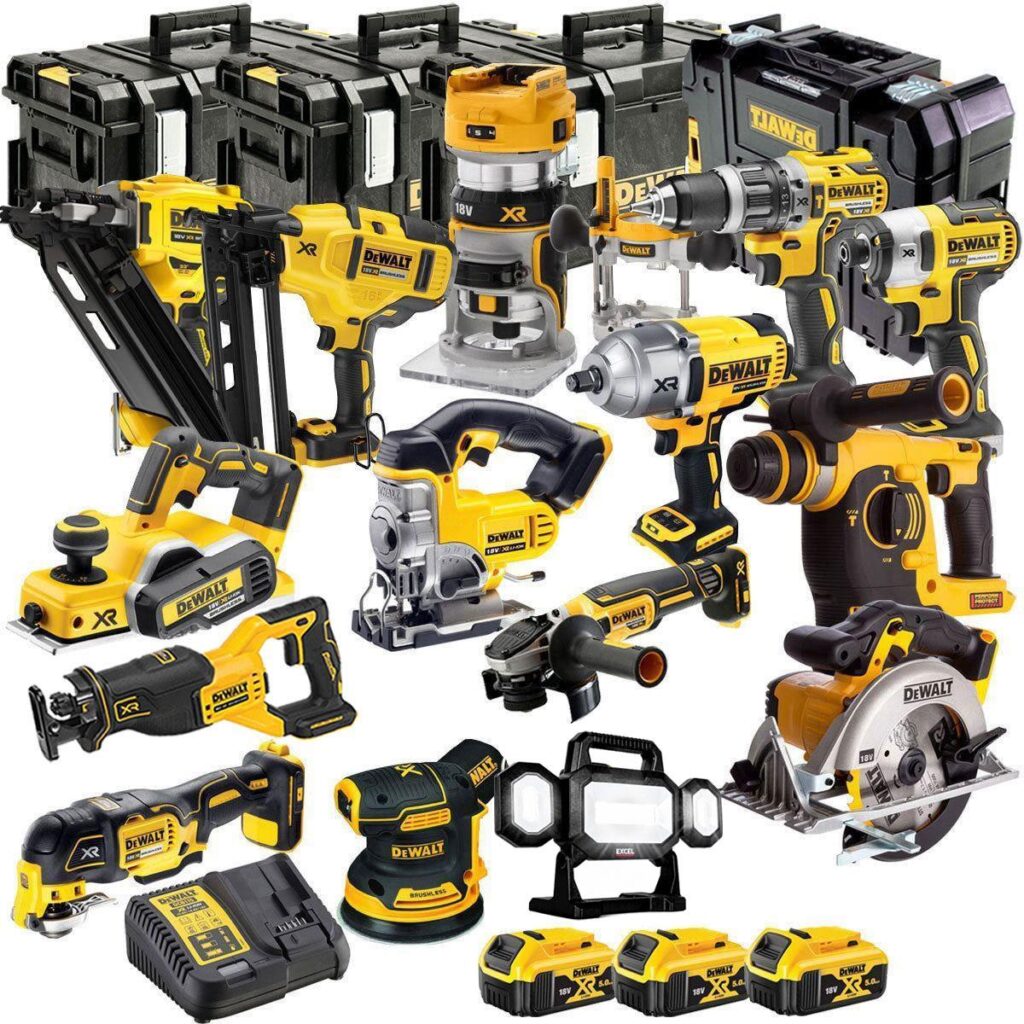
Quick answer: For most DIYers, a brushless 18V (also sold as 20V MAX) combo kit with a combi drill, impact driver, two batteries and a charger is the best starting point. Add a circular saw, multi-tool or reciprocating saw if you plan renovation work.
Buying tools as a combo kit is usually much better value than buying them one by one, and it commits you to a single battery platform so every tool shares the same batteries and charger.
Understanding the jargon
Voltage
18V is the standard platform for serious DIY and trade use in the UK. Some brands label the same voltage as 20V MAX, which refers to the peak voltage rather than the nominal voltage. Higher-voltage platforms exist for heavy-duty tools such as large saws and breakers.
Amp-hours (Ah)
The Ah rating tells you how much energy a battery stores. A 2.0Ah battery is light and ideal for drilling and driving, while 5.0Ah or larger batteries give longer runtime for saws and grinders.
Brushless vs brushed motors
Brushless motors are more efficient, run cooler and last longer, giving more runtime per charge. They cost a little more, but for anyone who uses their tools regularly they are well worth it.
Which tools should be in your kit?
- Combi drill: drilling into wood, metal and masonry with the hammer setting, plus driving screws.
- Impact driver: drives long screws and bolts quickly without strain on your wrist.
- Circular saw: straight cuts in timber and sheet materials.
- Reciprocating saw: demolition, pruning and cutting pipe.
- Oscillating multi-tool: plunge cuts, sanding and trimming in tight spaces.
- Angle grinder: cutting and grinding metal, tiles and paving.
- Work light and Bluetooth speaker: handy extras that share the same batteries.
How many tools do you really need?
A two-tool kit covers most home jobs. Four to six tools suit house renovations and keen DIYers. Large ten-piece kits are designed for tradespeople or anyone fitting out a workshop, and they often include extra batteries and a rolling bag.
Battery care tips
- Store batteries indoors at room temperature over winter.
- Avoid leaving batteries completely flat for long periods.
- Use the manufacturer’s charger and keep contacts clean.
Frequently asked questions
Is 18V and 20V MAX the same?
In most cases yes. 20V MAX describes the maximum initial voltage of a battery that operates at a nominal 18V.
Are bare tools cheaper?
Bare tools (without batteries) are cheaper once you already own batteries on the same platform, which is why starting with a kit makes sense.
Do I need a combi drill and an impact driver?
Not strictly, but having both saves swapping bits constantly and makes larger projects much faster.
Browse combo kits, drills and saws in our Power & Tools range, delivered free across the UK.