Choosing between a desiccant and compressor dehumidifier depends on room temperature, moisture levels and how you plan to use it. This guide explains the practical differences for UK homes in winter, from cold garages to heated living spaces.
Quick answer: For a UK home in winter, a desiccant dehumidifier is worth considering for colder rooms, garages and conservatories, while a compressor model is often a practical choice for regularly heated living spaces. The right option depends on temperature, moisture levels, laundry habits and the amount of water you need to remove each day.
Condensation on windows, damp laundry and musty smells can become more noticeable during colder months. A dehumidifier can help manage excess moisture, but choosing the right type matters. Understanding how desiccant and compressor models work will help you select a suitable machine rather than buying one that does not match your home.
Desiccant vs compressor dehumidifier UK: the main differences
Both types remove moisture from indoor air, but they use different methods. The most important distinction for winter use is how well each performs at different temperatures.
How a desiccant dehumidifier works
A desiccant dehumidifier draws air through a moisture-absorbing material. The machine then removes the collected moisture from that material and gathers the resulting water in a tank or drainage system, depending on the model.
Because this process does not depend on cooling the air in the same way as a compressor unit, desiccant models can be a useful option for colder environments. They also release some warmth into the room during operation, which may be welcome in a chilly space.
Consider a desiccant model if you regularly need to manage moisture in a cold conservatory, an unheated spare room or a garage. Always check the product listing for operating conditions, drainage options and other specifications before deciding.
How a compressor dehumidifier works
A compressor dehumidifier draws air across a cold surface, causing moisture to condense into water droplets. The water collects in the tank or is directed through a continuous drainage connection if the model supports one.
Compressor models are often a sensible starting point for heated homes where rooms remain reasonably warm. Their performance depends on operating temperature, so a unit that works well in a heated lounge may be less suitable for a consistently cold outbuilding.
For winter use, think about where the machine will operate most often rather than choosing solely by its advertised litres-per-day figure.
Which dehumidifier is better for different UK rooms?
Room temperature and your main moisture problem should guide the decision. A dehumidifier for a warm bedroom does not necessarily need the same characteristics as one used in a cold garage.
- Heated living rooms: A compressor model is a practical option when the room is regularly heated and you want to manage everyday moisture.
- Cold bedrooms or spare rooms: Consider a desiccant model if the room remains chilly for long periods.
- Garages and conservatories: A desiccant model may suit colder conditions, but check the product listing for the manufacturer’s operating-temperature guidance and suitability for the space.
- Laundry rooms: Either type may help dry clothes indoors by removing moisture from the air. Choose based on room temperature, capacity and the manufacturer’s laundry-drying guidance.
- Large or persistently damp spaces: Consider the size of the area, the source of the moisture and the required extraction capacity. A dehumidifier will not repair leaks or other building defects.
Desiccant vs compressor dehumidifiers compared
This table summarises the main differences to consider when choosing a dehumidifier for winter.
| Feature | Desiccant | Compressor |
|---|---|---|
| Cold-room suitability | Often a good option for colder spaces | Generally better suited to warmer rooms |
| Heated living spaces | Can be suitable | Often a practical choice |
| Heat released into the room | Typically releases some warmth | Usually produces less noticeable room warming |
| Noise | Fan noise and operating sounds vary by model | Fan and compressor noise vary by model |
| Laundry drying | Can help remove moisture in cooler rooms | Can help in suitably warm rooms |
| Capacity comparison | Check litres per day and operating conditions | Check litres per day and operating conditions |
Neither type is automatically quieter, cheaper to run or better for every home. Check the individual product listing for noise information, power requirements, operating conditions and any available drainage features.
Choosing a dehumidifier for laundry drying
Drying clothes indoors introduces moisture into the air. If that moisture cannot escape through ventilation, it can settle on cold windows and walls or contribute to a damp atmosphere.
A dehumidifier can help by collecting some of this moisture, particularly when outdoor conditions make drying clothes outside difficult. For a cold utility room or conservatory, a desiccant model is worth considering. In a heated room, a compressor model may be suitable.
For better results, follow these practical steps:
- Place clothes on a drying rack with enough space between garments for air to circulate.
- Keep the drying area ventilated where practical and safe.
- Position the dehumidifier according to the manufacturer’s instructions, away from splashes and obstructions.
- Close doors to the rest of the home if recommended for your chosen drying setup, while maintaining appropriate ventilation.
- Use a humidity reading to judge whether moisture levels are improving rather than relying only on how quickly clothes feel dry.
Check whether the model includes a laundry mode before assuming it has one. You should also follow the manufacturer’s instructions on positioning the appliance around drying clothes.
Tank size, continuous drainage and daily capacity
Three specifications are particularly important: water tank capacity, continuous drainage and extraction capacity in litres per day. They describe different things and should not be confused.
Water tank capacity
The tank holds the water collected by the machine. A larger tank can mean fewer trips to empty it, but it does not necessarily mean the dehumidifier removes more moisture each day. The tank may fill quickly when moisture levels are high, so check the full-tank indicator and emptying instructions.
Continuous drainage
Some dehumidifiers support a drainage hose, allowing collected water to flow into a suitable drain instead of accumulating in the tank. This can be useful for regular laundry drying or prolonged operation. Confirm that the specific model supports continuous drainage and follow the instructions for hose placement and drainage height.
What litres per day means
The litres-per-day figure describes the amount of water a dehumidifier can extract under specified test conditions. Actual collection varies with room temperature, relative humidity, ventilation and other conditions. A model advertised at 20 litres per day will not necessarily collect that amount in a cold bedroom.
When comparing models, use the capacity figure alongside your room conditions and moisture problem. A small, occasionally damp bedroom may not need the same capacity as a large area used for frequent indoor laundry drying.
Examples of dehumidifiers to consider
These models provide starting points for comparing different extraction capacities and technologies. Their names and stated daily capacities are useful for narrowing your search, but they do not establish that one model is best for your home.
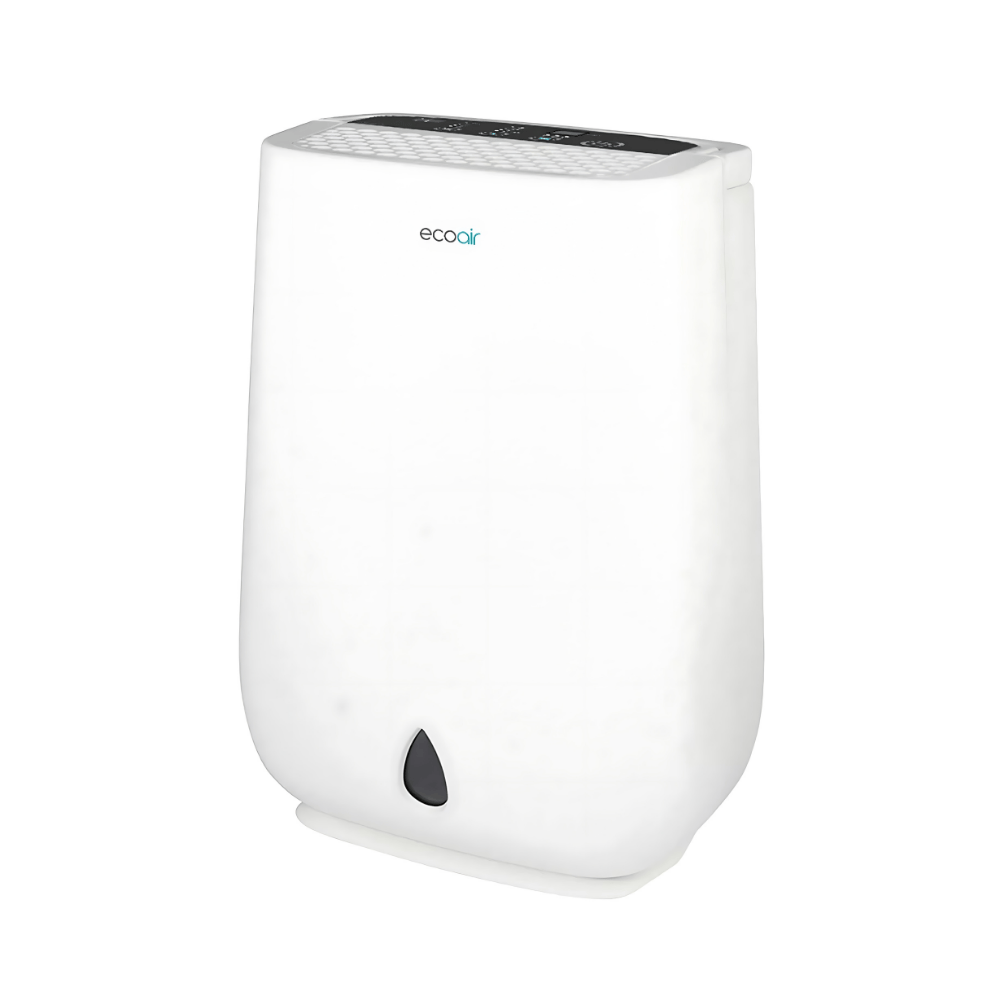
- For a lower-capacity desiccant option: The EcoAir DD1 Classic MK6 7.5L/Day Desiccant Dehumidifier is listed with a 7.5-litre daily capacity.
- For a higher-capacity desiccant option: The EcoAir DD3 Classic MK3 11L/Day Desiccant Dehumidifier is listed with an 11-litre daily capacity.
- Another desiccant model: The Meaco DD8L 7.5L/Day Desiccant Dehumidifier is another option to compare for your intended room.
- For heated living spaces: The Meaco Platinum 12L/Day Compressor Dehumidifier offers a compressor option with a stated 12-litre daily capacity.
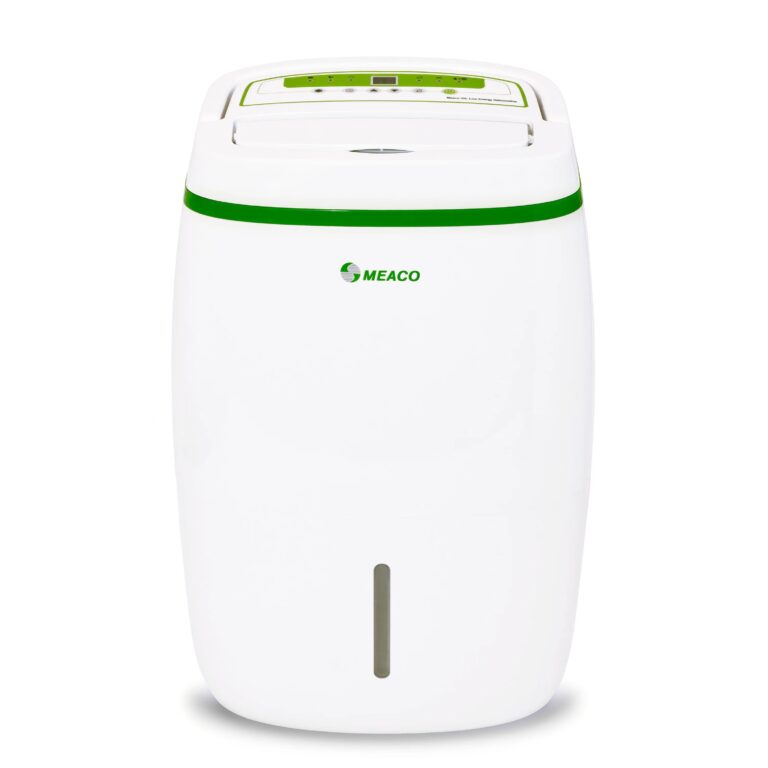
- For a higher-capacity compressor option: The Meaco Platinum 20L/Day Compressor Dehumidifier is listed with a 20-litre daily capacity.
- For comparing a larger stated capacity: The EcoAir DC26 26L/Day Compressor Dehumidifier is listed with a 26-litre daily capacity.
Before choosing, check the product listing for recommended room conditions, tank capacity, noise information, drainage compatibility, controls and dimensions. These details help establish whether the unit fits your actual requirements.
Noise, positioning and everyday use
Both technologies produce operating noise, mainly from moving air and the components used to remove moisture. The exact sound level depends on the model and its settings. If you plan to run a dehumidifier in a bedroom, study or living room, check the stated noise level in the product listing.
Place the appliance on a stable, level surface with the clearances specified by the manufacturer. Keep air inlets and outlets unobstructed, avoid using the machine where it may be exposed to water, and do not cover it with laundry.
Follow the electrical safety instructions and avoid using extension leads unless the manufacturer permits them. If the machine will run for long periods, check the tank regularly unless you have set up a supported continuous-drainage arrangement.
How to make the final choice
Start by identifying the coldest room where you intend to use the machine. If it is consistently chilly, compare desiccant models first. If it is a regularly heated living space, a compressor model is a sensible place to begin.
Next, consider how much moisture the room produces, how often you dry laundry indoors and how much maintenance you are willing to do. Compare the daily extraction capacity, tank size, drainage options, noise information and operating guidance of each candidate. Remember that ventilation, suitable heating and fixing the source of damp remain important alongside dehumidification.
There is no single capacity that suits every UK home. Choose a model based on the actual room and its conditions, and check the product listing whenever a specification is not clear.
Frequently asked questions
Is a desiccant or compressor dehumidifier better in winter?
It depends on the room temperature. Desiccant models are often worth considering for cold spaces, while compressor models are commonly suitable for heated rooms. Check the manufacturer’s operating guidance before using either type in a cold environment.
Can a dehumidifier help dry clothes indoors?
Yes. Both types can help remove moisture released by drying laundry. Choose according to the temperature of the drying room, the amount of laundry and the model’s stated features.
Does a 20-litre dehumidifier always collect more water than a 12-litre model?
The higher figure indicates a greater stated extraction capacity under specified conditions, but actual collection depends on temperature, humidity and the test conditions. Compare the full specifications rather than relying on the capacity figure alone.
Should I choose a larger water tank or continuous drainage?
A larger tank can reduce how often you need to empty the machine, while supported continuous drainage can reduce manual emptying during extended use. Choose based on your usage pattern and confirm the drainage options in the product listing.
Browse the Elvax dehumidifier range to compare options for your home. Every order includes free UK delivery within 5 to 8 business days, 30-day returns and secure card payment at checkout.