Choosing the best portable power station for home backup starts with what you want to power, how long you need it to run and whether you will use it at home, in a campervan or while camping. This guide covers capacity, output, battery technology, solar charging and safety checks.
Quick answer: The best portable power station for home backup UK buyers need depends on the appliances you want to run, their power requirements and how long you need electricity. Compare capacity in watt-hours (Wh), output in watts (W), charging options and battery technology before choosing a model for power cuts, camping or campervan trips.
What Is a Portable Power Station?
A portable power station is a rechargeable battery unit that supplies electricity to compatible devices and appliances. Depending on its available output, capacity and connections, it can provide a convenient source of power away from a mains socket or help keep selected equipment running during a power cut.
Unlike a petrol generator, a battery power station does not need to burn fuel while supplying stored electricity. This makes it useful for considering indoor backup arrangements, although electrical safety, ventilation requirements for connected equipment and the manufacturer’s instructions still matter.
Portable power stations are not automatically suitable for every household appliance. A model that can charge phones and run small electronics might not be capable of powering a kettle, heater or other high-demand appliance. Check the exact requirements of your equipment before relying on a battery unit.
How to Choose the Best Portable Power Station for Home Backup UK
Start by making a list of the devices you need to power. Think about essential equipment during a power cut, the electronics you use while camping and any appliances you expect to use in a campervan. This list will help you work out the capacity and output you actually need.
1. Understand battery capacity in Wh
Watt-hours measure how much energy a battery can store. A higher Wh figure generally means more stored energy, although the amount of usable energy depends on conversion losses, operating conditions and the equipment being powered.
For a simple estimate, divide the battery’s stated capacity by the power consumption of your device. A 100W device running for one hour uses approximately 100Wh, before accounting for losses.
For example, a power station with a stated capacity of 2,000Wh could theoretically supply a 100W load for 20 hours if every watt-hour were usable. Actual running time will be lower in practice, depending on the power station and connected equipment.
Consider the difference between short bursts of use and continuous operation. Charging several phones may use relatively little energy, while keeping a refrigerator running for an extended period can require considerably more. Check the appliance’s actual consumption rather than relying on its name or size.
2. Check output in watts
Capacity tells you how much energy is stored, while output tells you how much power the unit can deliver at a given time. Both figures matter when selecting a power station.
A power station might have enough stored energy to run an appliance for several hours but still lack the output needed to start it. Motors and compressors can draw more power when starting than they use during normal operation.
- Phones and small electronics: Check the available ports, charging compatibility and required output.
- Laptops and camera equipment: Compare their power requirements with the station’s available connections and output.
- Refrigerators and similar appliances: Check running consumption and starting power requirements.
- Kettles, heaters and cooking equipment: These can require substantial power, so verify their rated demand and the station’s continuous output.
Do not confuse peak output with continuous output. A peak rating describes a temporary output capability under specified conditions, not necessarily the power available for sustained use. Read the product listing for the relevant ratings and limitations.
3. Consider LiFePO4 battery technology
LiFePO4 stands for lithium iron phosphate, a type of lithium battery chemistry used in portable power stations. If you are comparing models for frequent use, look at the battery chemistry alongside the manufacturer’s information about charging, operating conditions and expected service life.
The Jackery Explorer 3000 v2 and Anker SOLIX S2000 listed below both specify LiFePO4 batteries. This provides a useful starting point when comparing their stated capacities and intended uses.
Battery chemistry alone does not tell you everything about a product. Review the manufacturer’s guidance for charging temperatures, storage, maintenance and any stated battery-life information rather than assuming that every LiFePO4 unit performs identically.
4. Decide whether solar charging matters
Solar charging can be useful when you are camping, travelling in a campervan or preparing for situations where mains electricity is unavailable. However, charging performance depends on the compatible solar panels, available sunlight, panel positioning, weather and the power station’s input limits.
In the UK, cloudy weather and shorter winter days can reduce the energy collected from solar panels. Do not assume a panel will recharge a large battery in a fixed number of hours without checking the system’s specifications and considering local conditions.
Before purchasing, confirm whether solar panels are included or sold separately. Check the permitted input voltage, connectors and maximum solar charging input in the product listing. Using incompatible equipment can prevent charging or damage the system.
Portable Power Stations Compared
These two options have different stated capacities. Compare their listed specifications against your essential devices and the amount of backup time you want.
| Feature | Jackery Explorer 3000 v2 | Anker SOLIX S2000 |
|---|---|---|
| Stated capacity | 3072Wh | 2010Wh |
| Battery chemistry | LiFePO4 | LiFePO4 |
| Listed purpose | Home backup, camping and RV use | Home backup |
| Additional detail supplied | Solar generator | 3000W peak output |
| What to check | Continuous output, connections and charging limits | Continuous output, connections and charging limits |
Jackery Explorer 3000 v2 Portable Power Station
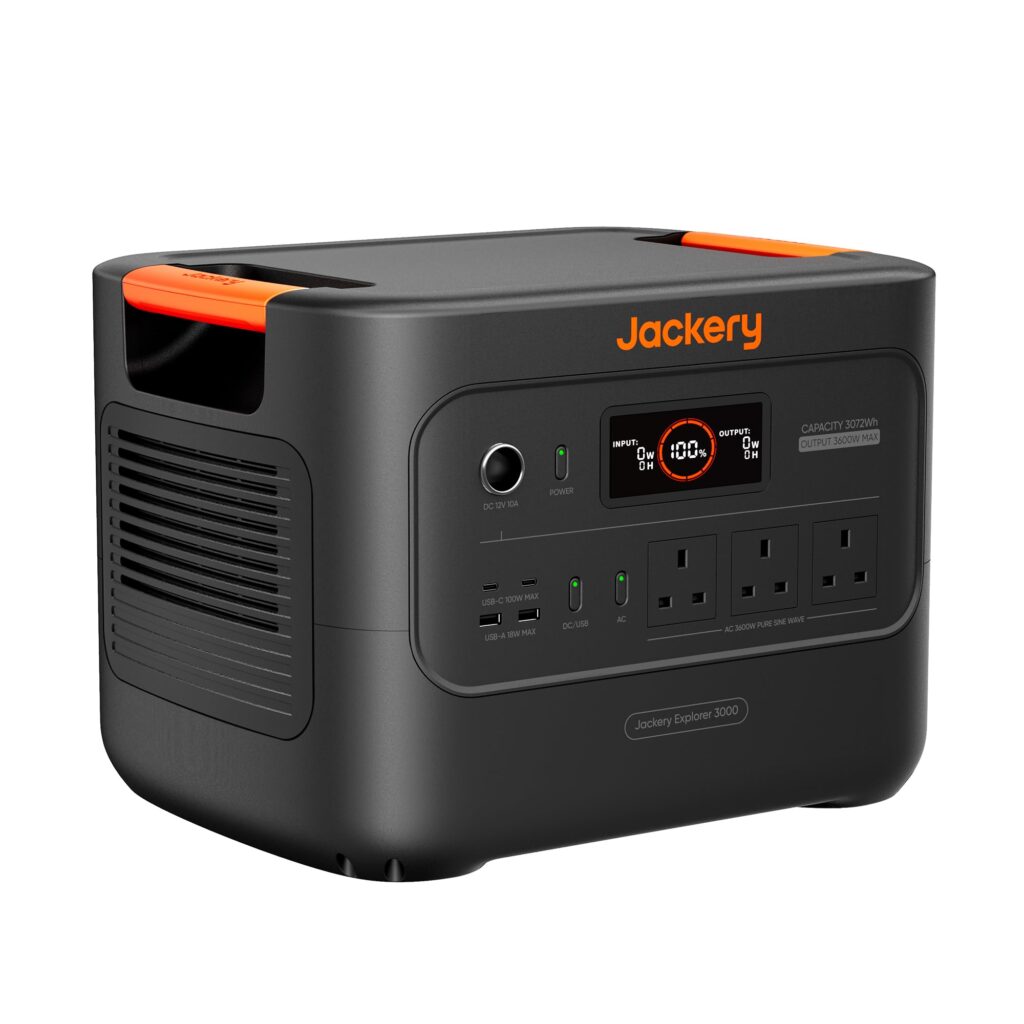
The Jackery Explorer 3000 v2 Portable Power Station 3072Wh has a stated capacity of 3072Wh and a LiFePO4 battery. It is listed for home backup, camping and RV use, making it worth considering if you need a portable power source for more than one setting.
Its stated capacity is higher than that of the Anker model discussed below. However, capacity alone does not determine which product is suitable. Check its continuous output, starting-power capability, connections, weight and charging requirements before buying.
Anker SOLIX S2000 Portable Power Station
The Anker SOLIX S2000 Portable Power Station 2010Wh has a stated capacity of 2010Wh, a LiFePO4 battery and a listed peak output of 3000W. It is described for home backup use.
The peak figure is not a substitute for the continuous output rating. If you plan to run appliances with motors or heating elements, check the full output specifications and starting requirements before deciding whether this model is suitable.
What Can a Portable Power Station Run During a Power Cut?
A portable power station can be useful for selected essentials, but you need to calculate both the power demand and the expected running time. Start with equipment that matters most during an interruption to mains electricity.
- Communications: Phones, tablets and suitable routers, provided their power requirements and connections are compatible.
- Lighting: Compatible low-power lamps can help provide light without using a large amount of stored energy.
- Work equipment: Laptops and selected small electronics may be suitable if the output and charging connections match.
- Food storage: A refrigerator may be possible if its running demand, starting surge and required backup duration fit the station’s capabilities.
- Medical equipment: If you rely on electrically powered medical equipment, confirm suitability with the equipment manufacturer or healthcare provider and arrange a dependable backup plan.
Make a simple energy budget before buying. Multiply each device’s wattage by the number of hours you expect to use it, then add the estimated energy requirements together. Allow additional capacity for conversion losses and uncertainty.
Do not assume a portable power station can power your entire home. Connecting one to household wiring requires an appropriate, professionally installed arrangement. Never connect a power station to a wall socket to feed electricity back into the property. This can create a serious electrical hazard.
Using a Power Station for Camping and Campervans
For camping, consider how much equipment you will charge each day and how you will replenish the battery. A phone, camera and small lighting setup have different requirements from a portable refrigerator or cooking appliance.
For campervan use, check the available storage space, weight, ventilation and charging arrangements. A large-capacity station may store more energy, but it can also be less convenient to move. Check the product dimensions and weight before planning where it will sit.
Think about the length of your trip and whether you can recharge from mains electricity, a compatible vehicle charging system or suitable solar panels. Do not assume every power station supports every charging method.
Safety and Maintenance: What to Check
Portable power stations contain rechargeable batteries and electrical components, so follow the manufacturer’s instructions rather than treating the unit like an ordinary extension lead.
- Use compatible charging cables, adapters and solar panels.
- Keep the unit within its specified temperature and operating conditions.
- Protect it from water and damp conditions unless the manufacturer explicitly confirms the relevant protection.
- Do not cover ventilation openings or operate the unit in a way that causes overheating.
- Inspect cables and connectors for damage before use.
- Follow the manufacturer’s advice for long-term storage and periodic charging.
- Never open, modify or attempt to repair a damaged battery yourself.
If the unit becomes unusually hot, swells, leaks, smells unusual or shows other signs of damage, stop using it and follow the manufacturer’s safety guidance. Keep it away from combustible materials where instructed and seek appropriate assistance.
Frequently Asked Questions
What capacity do I need for home backup?
Work out which devices you want to run, add their estimated energy consumption for the required period and allow for conversion losses. Then check that the station can also meet their continuous and starting power requirements.
Is a higher Wh rating always better?
A higher Wh rating means more stated stored energy, but it does not automatically mean a product is right for you. Output, weight, charging options, available ports and intended use also affect suitability.
Can I charge a portable power station with solar panels in the UK?
Solar charging can be possible when the station supports a compatible solar input. Check the required connectors and input limits, and remember that UK weather and daylight hours affect charging performance.
Can I use a portable power station to power my whole house?
Not necessarily. Most purchasing decisions should start with selected compatible appliances rather than assuming whole-house coverage. Any connection to household wiring must use an appropriate professionally installed arrangement, and the system must be suitable for the intended load.
Ready to compare your options? Visit Elvax’s Power & Tools category to review available products. Elvax provides free UK delivery on every order within 5 to 8 business days, 30-day returns and secure card payment at checkout.