A robot lawn mower can help maintain your lawn with less manual mowing, but the right model depends on your garden's size, layout, slopes and grass conditions. This UK buying guide explains wire-free navigation, boundary systems, weather considerations, security and setup before you choose.
Quick answer: A robot lawn mower can be worth considering if you want regular lawn maintenance without pushing a mower yourself. Before buying, check the mower’s stated coverage, navigation system, ability to handle your garden’s slopes, operating requirements and suitability for typical UK weather.
Robot lawn mowers are designed to cut grass automatically within a defined working area. Depending on the model, they may use boundary wires, satellite positioning, cameras or other navigation technology. The best option for your garden is not necessarily the model with the largest advertised coverage. It is the one that suits your lawn’s actual layout and maintenance needs.
Robot Lawn Mower UK Buying Guide: What to Check First
Start by measuring the lawn you intend to maintain. If your garden contains separate grass areas, narrow passages, flower beds or steep sections, make a note of them before comparing models.
Also consider how you currently maintain the lawn. If you prefer short, regularly maintained grass, automated mowing may suit your routine. If the grass grows long between cuts, you may need to prepare the lawn and follow the mower manufacturer’s recommendations before starting automatic operation.
Measure the actual lawn area
Do not use the total size of your garden as the mower’s required coverage. Paths, patios, decking, buildings, borders and planted areas reduce the amount of grass that needs cutting.
Measure each grass section and add the areas together. For a rectangular lawn, multiply its length by its width. For an irregular garden, divide the grass into simpler shapes and estimate each section separately.
Then compare your result with the manufacturer’s stated coverage. Avoid choosing a mower whose stated capacity is below your actual requirements, and remember that the shape of the lawn can affect how practical a model is to use.
Wire-Free vs Boundary-Wire Robot Lawn Mowers
One of the main decisions is how the mower defines its working area. Some robot mowers use a physical boundary wire installed around the lawn, while wire-free models use other navigation methods to identify and manage their operating area.
Boundary-wire models
A boundary wire creates a defined perimeter that tells a compatible mower where to operate. Installation involves positioning the wire according to the manufacturer’s instructions and securing it around the lawn’s edges and any areas that must be excluded.
This can be a practical arrangement for gardens with a clear, relatively stable layout. However, installation takes planning, and changes to borders or lawn sections may require adjustments to the boundary system.
Wire-free models
Wire-free models avoid the need for a traditional perimeter wire, but they still need a reliable way to understand the lawn’s boundaries and navigate obstacles. Depending on the model, this may involve cameras, satellite positioning, laser-based sensing or a combination of technologies.
Wire-free does not mean installation-free. You may still need to map the lawn, define working zones, configure excluded areas or set up positioning equipment. Check the product listing to understand what is required.
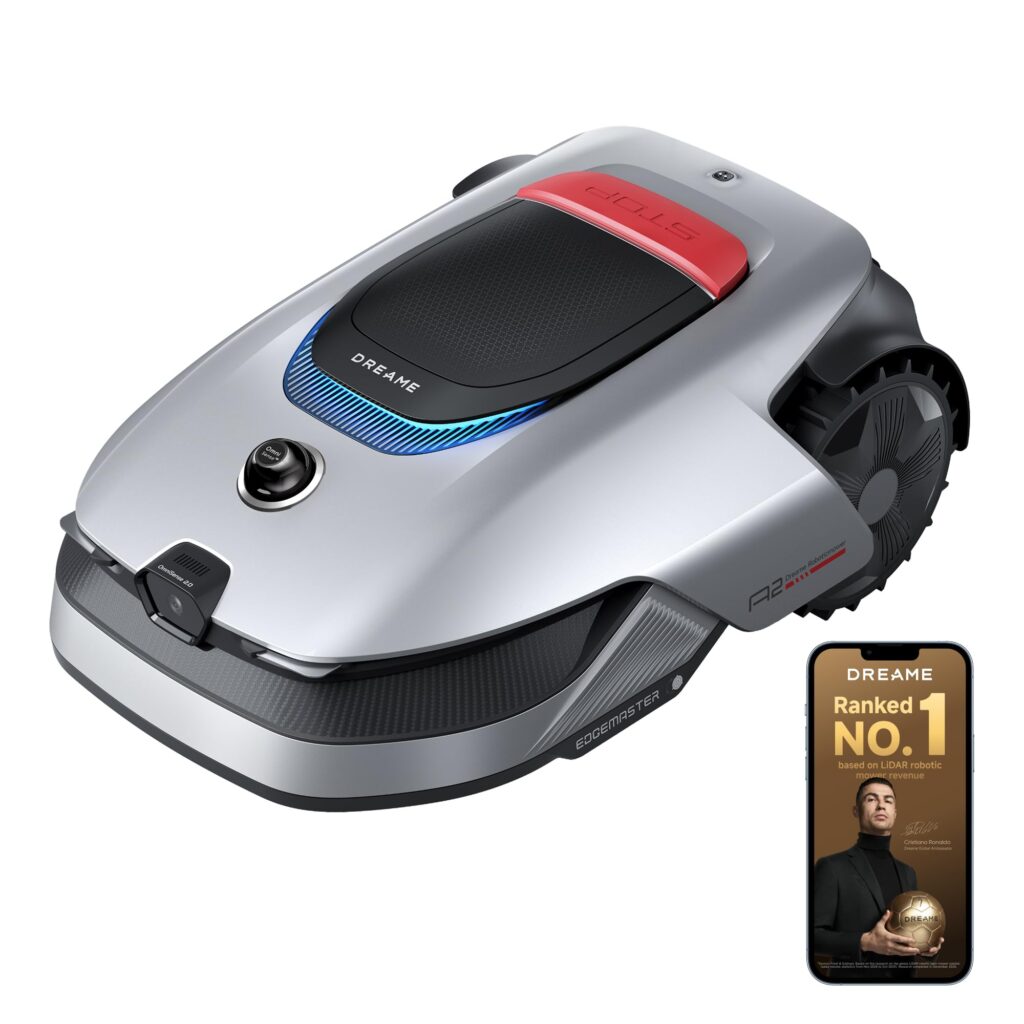
Two wire-free options listed by Elvax are the Dreame A2 1200 Robot Lawn Mower, described as using 3D LiDAR and AI vision without requiring RTK, and the Mammotion LUBA 2 AWD 5000X Robot Lawn Mower, described as using RTK, AI vision and all-wheel drive.
Compare Lawn Coverage, Navigation and Terrain
Coverage is a useful starting point, but you should consider more than the advertised area. A large, open lawn may be relatively straightforward to map, while a smaller garden with several narrow passages, trees and separate sections can require more careful planning.
| Feature | Dreame A2 1200 | Mammotion LUBA 2 AWD 5000X |
|---|---|---|
| Stated lawn coverage | Up to 0.3 acre | 1.25 acres |
| Boundary approach | Wire-free | Wire-free |
| Navigation details listed | 3D LiDAR and AI vision, no RTK needed | RTK and AI vision |
| Drive system detail listed | Check product listing | All-wheel drive |
| What to check before buying | Coverage, garden layout and installation requirements | Coverage, garden layout and installation requirements |
The Dreame A2 1200 may be worth comparing if its stated coverage matches your lawn. The Mammotion LUBA 2 AWD 5000X lists a larger coverage area and all-wheel drive. Neither figure alone confirms suitability for every garden, so review the full specifications and installation guidance.
Check slopes and uneven ground
Slopes can affect traction, steering and cutting performance. If your lawn has steep banks, uneven patches, dips or tree roots, look for the manufacturer’s specified slope capability and ground-clearance information.
Do not assume all-wheel drive guarantees that a mower can handle every incline or surface. Grass condition, moisture, wheel traction and the shape of a slope can all affect movement. If your garden has challenging terrain, confirm that the selected model is designed for those conditions.
How Does UK Weather Affect Robot Lawn Mowers?
British gardens experience changing conditions throughout the year, including rain, damp grass, frost and periods of strong sunshine. These conditions can affect when you should mow and how you care for the equipment.
Mowing wet grass
Wet grass can be harder to cut cleanly and may stick to cutting components. Damp ground can also reduce traction, particularly on slopes. The appropriate response depends on the mower’s design and the conditions in your garden.
Check whether the manufacturer provides guidance on mowing during rain, operating on wet grass and returning the mower to its charging station in poor weather. If the lawn is waterlogged or slippery, waiting for conditions to improve is generally sensible.
Rain, frost and winter storage
Do not assume that a weather-resistant mower can operate in every weather condition. Resistance to rain, permission to mow in wet conditions and protection during storage are different considerations.
- Check the manufacturer’s stated weather and temperature limits.
- Follow instructions for cleaning grass clippings and maintaining the cutting system.
- Keep charging equipment installed and protected as instructed.
- Follow the recommended procedure for winter storage and battery care.
- Inspect the lawn before mowing after heavy rain or frost.
During periods when the grass grows slowly, you may need less frequent mowing. Adjust schedules to the lawn’s growth and the manufacturer’s operating guidance rather than leaving the mower running unnecessarily.
Setting Up a Robot Lawn Mower
A careful setup helps prevent missed areas, repeated navigation problems and accidental mowing outside the intended boundaries. Read the installation instructions before positioning the charging station or creating a lawn map.
Prepare the lawn
Remove toys, garden tools, branches and other loose objects from the grass. Identify exposed cables, holes, tree roots and other potential obstacles. Check the mower’s instructions for guidance around flower beds, paths, ponds and other garden features.
Plan zones and boundaries
If your lawn has several sections, check how the model manages separate zones and narrow passages. Some gardens may require more planning than others, especially where grass areas are divided by paths or other surfaces.
For a wire-free model, follow the mapping procedure carefully and verify that the defined working area matches the real lawn. If the mower uses positioning equipment, check the manufacturer’s guidance on installation and signal conditions.
Choose the charging station location
The charging station should be installed according to the manufacturer’s requirements. Check the recommended surface, clearance, access route and protection from the elements. Make sure the mower can reach the station reliably from its intended working areas.
After setup, observe the first mowing sessions. Check whether the mower misses corners, struggles with passages or repeatedly encounters obstacles. Correct the map or installation where the instructions permit before relying on the mower for routine maintenance.
Security and Safe Operation
A robot mower is a valuable piece of garden equipment, so consider where it will be stored and how access to your garden is controlled. Check whether the model provides security features such as PIN protection, alarms, tracking or app-based controls. Do not assume that every feature is included.
- Keep the mower and charging station in a suitable, secure location.
- Use available security settings and follow the setup instructions.
- Store details of the model and purchase for your records.
- Keep children and pets away while the mower is operating, following the manufacturer’s safety instructions.
- Switch off and isolate the equipment as instructed before cleaning or working near the cutting mechanism.
Never handle the blades while the mower is powered or capable of starting automatically. Before maintenance, follow the complete shutdown procedure in the manual. Check the manufacturer’s advice about supervision and operation when children or pets use the garden.
Is a Robot Lawn Mower Worth It?
A robot mower may suit you if you value regular lawn maintenance, have a compatible garden layout and are comfortable completing the initial setup and routine care. It may be less suitable if your grass area is very small and simple, the lawn has challenging terrain or you prefer to mow only occasionally.
Remember to consider the work that remains. You may still need to trim lawn edges, clear debris, maintain borders and carry out seasonal lawn care. A robot mower reduces some mowing tasks, but it does not eliminate all garden maintenance.
Before deciding, compare the lawn area, navigation approach, terrain requirements, charging arrangements and maintenance instructions. Read the full product listing and manufacturer guidance to confirm that the mower fits your garden.
Frequently Asked Questions
Are wire-free robot lawn mowers better than boundary-wire models?
Neither approach is automatically better for every garden. Wire-free models avoid a physical perimeter wire but may require mapping, positioning or other setup. Boundary-wire models require installation of the wire but can suit gardens with a defined layout. Compare the setup requirements against your garden’s needs.
Can a robot lawn mower cut wet grass in the UK?
It depends on the model and the conditions. Wet grass can affect cutting quality and traction, so check the manufacturer’s instructions and avoid operating on waterlogged or slippery ground when conditions are unsuitable.
How much lawn coverage do I need?
Measure the grass area rather than the whole garden, then compare it with the manufacturer’s stated coverage. Also consider narrow passages, separate lawn sections, slopes and obstacles that could affect navigation.
Can I leave a robot lawn mower outside all year?
Do not assume every model is suitable for year-round outdoor use. Check the manufacturer’s weather limits, charging-station requirements, cleaning instructions and recommendations for winter storage.
Ready to compare models? Visit Elvax’s Yard & Garden category to review available garden equipment. Elvax offers free UK delivery on every order within 5 to 8 business days, 30-day returns and secure card payment at checkout.